
Introduction
A blocked drainage pipe can cause slow water flow, bad smell, wastewater backup, leakage near joints and repeated maintenance problems.
In many cases, the pipe material is not the real issue. The blockage is usually caused by wrong installation, construction debris, grease, sand, foreign objects or poor drainage design.
Why Do PVC Drainage Pipes Block?
PVC drainage pipes usually block because water and waste are not flowing smoothly through the system. The most common causes include incorrect pipe slope, undersized pipe diameter, construction debris, poor jointing, too many sharp bends, grease buildup, sand entry, foreign objects, damaged pipes and lack of inspection access.
A good drainage system needs the right pipe size, correct gradient, proper fittings, clean installation and planned maintenance access.
1. Incorrect Pipe Slope
Wrong pipe slope is one of the main reasons drainage pipes block.
Drainage pipes normally depend on gravity flow. If the pipe slope is too flat, water moves slowly and solid waste can settle inside the pipe. Over time, this buildup reduces the internal flow area and creates a blockage.
If the slope is too steep, water may move too fast while heavier solids remain behind. This can also lead to deposits inside the pipe.
The correct slope depends on the pipe diameter, drainage application and approved project design. PVC drainage pipes should not be installed by visual judgment alone. Contractors should follow the plumbing or drainage layout approved for the project.
2. Undersized Drainage Pipe
A drainage pipe that is too small for the expected flow can block more often.
This can happen in kitchens, bathrooms, labour accommodations, commercial buildings, restaurants and high-use drainage lines. When the pipe diameter is not suitable for the connected fixtures and wastewater volume, solid waste and suspended particles may collect inside the pipe.
Before selecting PVC drainage pipes, the project team should confirm:
- Pipe diameter
- Application type
- Number of connected fixtures
- Expected flow
- Horizontal pipe run
- Required fittings
- Site drainage layout
Choosing pipe size based only on price can create long-term drainage problems.
3. Construction Debris Inside the Pipe
Construction debris is a common cause of drainage blockage on new project sites.
During construction, open pipe ends may collect cement, sand, stones, broken tiles, plastic pieces, cloth, packaging material or dust. If the pipe openings are not protected, debris can enter the drainage line before final installation.
The problem may not appear immediately. The pipe may work during initial testing but block later when wastewater starts carrying more material through the system.
To reduce this risk:
- Cover open pipe ends during construction
- Keep pipes away from loose debris
- Avoid using drainage lines for site waste disposal
- Inspect the line before handover
- Clean the system before final use
4. Poor Pipe Jointing
PVC drainage systems depend on proper jointing. If the joint is not aligned, sealed or inserted correctly, it can create internal edges where waste, hair, grease or debris collect.
Common jointing problems include:
- Misaligned pipe connections
- Incomplete insertion into fittings
- Wrong solvent cement application
- Damaged rubber ring seals where applicable
- Gaps between pipe and fitting
- Rough internal edges
- Incorrect fittings used at junctions
- Pipe movement after installation
Poor jointing can also cause leakage, bad smell and wastewater seepage around the drainage area.
5. Too Many Sharp Bends
Drainage systems should allow smooth flow. Too many sharp bends can slow the movement of wastewater and create points where solids collect.
Blockages commonly happen near:
- Elbows
- Junctions
- Long horizontal runs
- Low points
- Poorly aligned fittings
- Areas without cleanout access
Where possible, pipe routing should be planned with suitable bends, correct fittings and inspection access. Sharp direction changes should not be added without considering flow and future maintenance.
6. Grease, Oil and Food Waste
Kitchen drainage lines are highly affected by grease and oil.
Hot grease may enter the pipe in liquid form, but when it cools, it can stick to the inner wall of the pipe. Food particles then attach to the grease layer. Over time, the pipe opening becomes smaller and water flow slows down.
This is common in:
- Restaurants
- Cloud kitchens
- Cafeterias
- Food processing areas
- Villa kitchens
- Commercial kitchens
Where food waste and oil are involved, grease traps and proper waste control are important. Grease should not be allowed to enter the drainage line freely.
7. Sand, Soil and Silt Entry
Outdoor drainage pipes can block when sand, soil or silt enters the system. This is common in construction sites, landscape areas, farms, car wash areas and open drainage points.
Small amounts of sand may not cause immediate blockage. But repeated entry can create buildup, especially if the pipe slope is weak or the drainage line has low points.
Outdoor drain openings should be protected with suitable grates, covers or filters based on the application.
8. Foreign Objects in the Drainage Line
PVC drainage pipes are designed to carry wastewater, not solid waste or unsuitable objects.
Common materials that cause blockage include:
- Wet wipes
- Cloth pieces
- Plastic wrappers
- Sanitary products
- Hair buildup
- Soap residue
- Cement pieces
- Small stones
- Food waste
Even a correctly installed drainage system can block if unsuitable materials are regularly flushed or washed into it. In buildings and commercial facilities, user awareness and regular maintenance are also important.
9. Damaged or Deformed Pipe
PVC drainage pipes can block if they are cracked, crushed, bent or deformed.
This may happen due to:
- Poor bedding support
- Heavy load above underground pipes
- Incorrect backfilling
- Site machinery movement
- Impact during installation
- Poor storage before installation
Using the wrong pipe type for the application
If the pipe loses its shape, wastewater flow becomes restricted. For underground installations, proper bedding, support and backfilling are important to protect the pipe from deformation.
10. No Inspection or Cleaning Access
Drainage systems need access points for inspection and cleaning. If cleanouts, inspection chambers or access points are missing, blockages become harder to identify and remove.
This is especially important for:
- Long pipe runs
- Commercial drainage systems
- Kitchen drainage lines
- Underground drainage
- Areas with bends and junctions
- High-use buildings
Without access, even a small blockage can become a larger maintenance issue.
Signs of a Blocked PVC Drainage Pipe
Common warning signs include:
- Slow water drainage
- Gurgling sound from drains
- Bad smell
- Wastewater backup
- Repeated overflow
- Leakage near joints
- Wet patches around drainage areas
- Frequent need for cleaning
If the same issue happens repeatedly, the problem may not be only temporary blockage. It may be connected to pipe slope, pipe size, jointing, pipe damage or drainage layout.
How to Reduce PVC Drainage Pipe Blockages
To reduce the chance of blockage:
- Select the correct pipe diameter
- Follow the approved slope requirement
- Avoid unnecessary sharp bends
- Use suitable PVC drainage fittings
- Install joints properly
- Protect pipe openings during construction
- Prevent grease and food waste entry
- Keep sand and soil away from outdoor drains
- Provide inspection and cleaning access
- Store and handle pipes properly before installation
Good drainage performance depends on both product quality and installation quality.
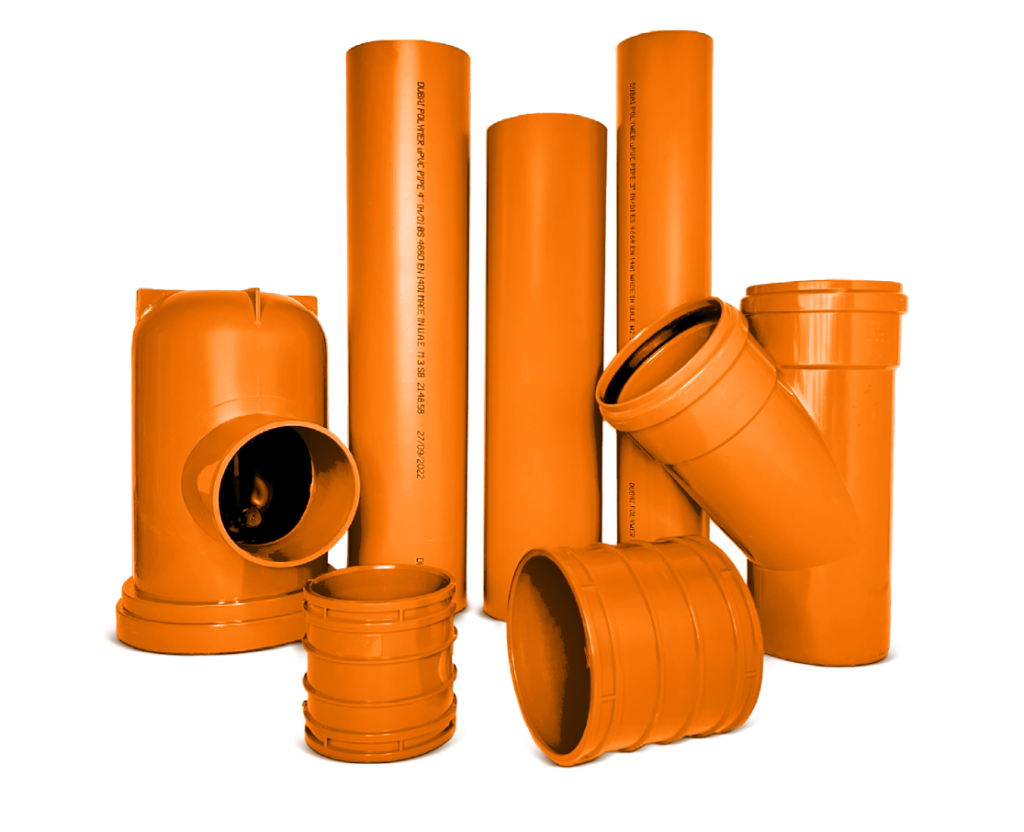
Dubai Polymer PVC Drainage Pipes
Dubai Polymer Industries supplies PVC pipes for different project requirements, including drainage, plumbing, construction and infrastructure applications.
For better drainage performance, buyers and contractors should confirm the pipe size, application, quantity, fitting requirements and site conditions before ordering.
This helps select the right PVC drainage pipe option for the project and reduces the risk of installation-related issues.
Conclusion
PVC drainage pipes can block for several reasons. The most common causes include wrong slope, undersized pipes, poor jointing, construction debris, grease, sand, foreign objects, damaged pipes and lack of inspection access.
Before selecting or installing PVC drainage pipes, check the pipe diameter, drainage application, slope, fittings, installation method and maintenance access. These details help improve long-term drainage performance and reduce repeated blockage problems.
For PVC drainage pipe requirements, share your pipe size, quantity, application and project location with Dubai Polymer Industries.
FAQs
What causes PVC drainage pipes to block?
PVC drainage pipes can block due to wrong pipe slope, small pipe size, construction debris, grease, sand, foreign objects, poor jointing, damaged pipes or lack of cleaning access.
Can wrong pipe slope cause drainage blockage?
Yes. If the slope is too flat, solids may settle inside the pipe. If the slope is too steep, water may flow faster than solids, leaving waste material behind.
Can grease block PVC drainage pipes?
Yes. Grease and oil can stick to the inner wall of the pipe after cooling. This is common in kitchens, restaurants, cafeterias and food-service areas.
Why do new drainage pipes block after construction?
New drainage pipes may block because of construction debris such as cement, sand, stones, plastic pieces or broken tile fragments entering the pipe before handover.
How can contractors prevent PVC drainage pipe blockage?
Contractors can reduce blockage by selecting the correct pipe size, maintaining proper slope, using suitable fittings, protecting open pipe ends, installing joints correctly and providing inspection access.
Can damaged PVC pipes cause blockage?
Yes. Cracked, crushed or deformed pipes can restrict wastewater flow and collect debris. Underground pipes are more likely to deform if bedding, backfilling or load protection is not done properly.
How do I know if a PVC drainage pipe is blocked?
Common signs include slow drainage, bad smell, gurgling sound, water backup, repeated overflow, leakage near joints and frequent cleaning issues.
Can PVC drainage pipes be cleaned?
Yes. PVC drainage pipes can be cleaned if proper access points are available. Inspection chambers and cleanouts make cleaning and maintenance easier.
What details should I share before ordering PVC drainage pipes?
Share the pipe size, quantity, drainage application, project location, required fittings and installation details. This helps the supplier recommend a suitable PVC drainage pipe option.