
Introduction
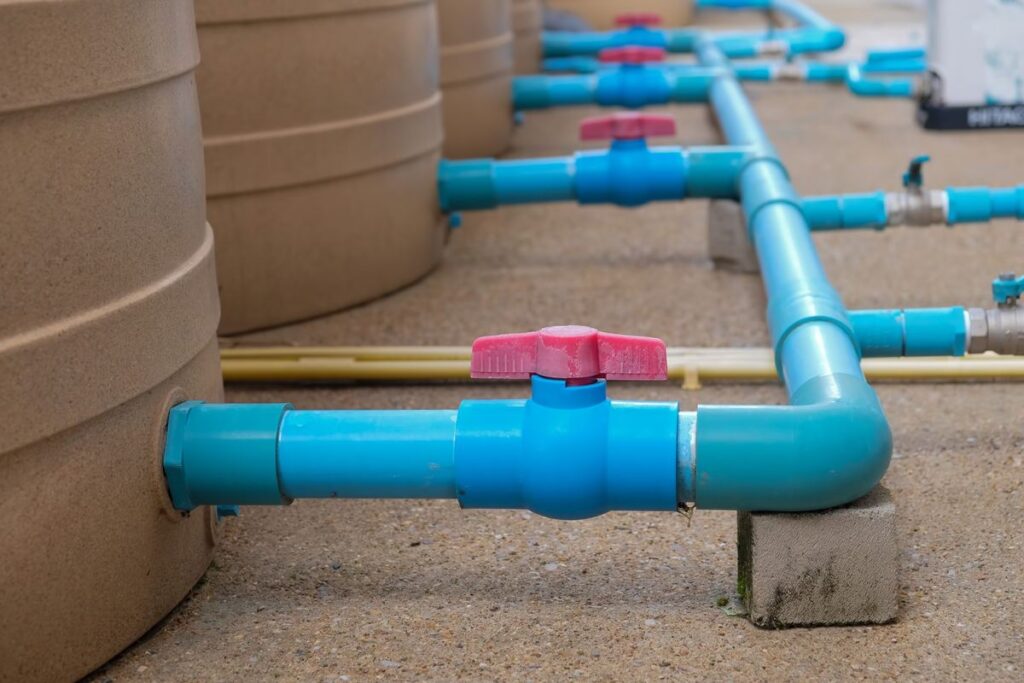
Water tank fittings may look like small components, but they control how water enters, exits, overflows and drains from the tank.
A good quality tank can still create problems if the fittings are wrongly selected, poorly installed or placed without considering the site plumbing.
This guide explains the four main water tank fittings:
- Inlet
- Outlet
- Overflow
- Drain
What Are Water Tank Fittings?
Water tank fittings are the connection points between the tank and the plumbing system.
They allow water to:
- Enter the tank
- Leave the tank
- Overflow safely when the tank is full
- Drain out during cleaning or maintenance
Common fitting components include threaded sockets, bulkhead fittings, valves, washers, gaskets, locknuts, pipe connectors, float valves and overflow pipes.
1. Water Tank Inlet
The inlet is the fitting through which water enters the tank.
In most installations, the inlet is connected to the incoming water supply line. This may come from a municipal water connection, tanker filling line, borewell system or another storage source.
Purpose of the Inlet
The inlet controls the filling of the tank. It allows water to enter the storage tank in a controlled way.
A proper inlet arrangement helps prevent:
- Uncontrolled filling
- Splashing inside the tank
- Damage to internal components
- Overflow caused by poor filling control
- Stress on the tank wall from unsupported pipework
In many installations, the inlet line is connected to a float valve or ball valve. The float valve helps stop the incoming water once the tank reaches the required level.
Usual Inlet Position
The inlet is usually placed near the upper section of the tank or on the top area, depending on the tank design and installation requirement.
For polyethylene water tanks, the inlet position should be selected carefully. Random drilling or incorrect fitting placement can cause leakage, wall stress or warranty-related issues.
What to Check for the Inlet
Before confirming the inlet fitting, check:
- Incoming pipe size
- Water source
- Filling pressure
- Whether a float valve is required
- Whether the tank is filled manually or automatically
- Whether the pipework is properly supported
- Whether the inlet position allows easy maintenance
Fitting placement should also be checked along with the water tank base requirements, especially for rooftop and large-capacity installations.
2. Water Tank Outlet
The outlet is the fitting through which stored water leaves the tank.
It connects the tank to the building plumbing line, pump suction line, irrigation line or water distribution system.
Outlet planning may differ for vertical water tanks and horizontal water tanks, depending on the available space, installation height and plumbing layout.
Purpose of the Outlet
The outlet allows stored water to be used. It is one of the most important fittings because it affects water flow from the tank.
A correctly planned outlet helps ensure:
- Proper water supply
- Better pump connection
- Easier valve control
- Reduced air entry into the line
- Better maintenance access
The outlet should be matched with the required flow rate. A small outlet may restrict water flow, while an oversized outlet may not be necessary for smaller applications.
Usual Outlet Position
The outlet is usually placed near the lower side of the tank, but not always at the absolute bottom.
Outlet for Pump Connection
When the outlet is connected to a pump, the plumbing layout should be planned carefully.
Important points include:
- The outlet size must suit the pump requirement
- A valve should be installed for isolation
- Pipework should be supported independently
- The pump suction line should avoid unnecessary bends
- The fitting should not be forced or twisted during installation
Poor pump connection can create vibration, pressure stress and leakage around the fitting area.
What to Check for the Outlet
Before confirming the outlet fitting, check:
- Required pipe size
- Flow requirement
- Pump connection requirement
- Valve requirement
- Height of the outlet from the base
- Accessibility for maintenance
- Whether the outlet should serve one line or multiple lines
For commercial buildings, labour accommodation, farms and construction sites, outlet planning should be done based on actual usage, not only tank capacity.
3. Water Tank Overflow
The overflow fitting allows excess water to leave the tank safely when the tank becomes full.
It is a safety feature, not an optional extra.
Purpose of the Overflow
The overflow prevents water from spilling from the tank lid, manhole or upper openings if filling continues after the tank is full.
Overflow can happen due to:
- Float valve failure
- Manual filling without monitoring
- High incoming water pressure
- Faulty control system
- Tanker filling beyond the required level
A proper overflow line directs excess water away from the tank in a controlled manner.
The overflow is usually placed near the upper side of the tank, slightly below the maximum filling level.
Overflow Pipe Discharge
The overflow pipe should discharge water to a safe and visible location.
A visible discharge point helps users identify if the tank is overflowing frequently. Frequent overflow usually means there is a problem with the float valve, control system or filling arrangement.
What to Check for the Overflow
Before confirming the overflow fitting, check:
- Overflow pipe size
- Maximum filling rate
- Float valve arrangement
- Discharge location
- Whether overflow water is visible
- Whether insect protection is needed
- Whether the overflow line has proper slope
The overflow line should be large enough to handle the incoming flow. If water enters the tank faster than the overflow can discharge, the tank can still overfill.
4. Water Tank Drain
The drain fitting is used to empty the tank during cleaning, maintenance or inspection.
It is sometimes called a washout connection.
Purpose of the Drain
The drain allows water and settled material to be removed from the lowest practical point of the tank.
It is useful for:
- Tank cleaning
- Removing remaining water
- Maintenance work
- Inspection
- Replacement preparation
- Emergency draining
The drain should not be confused with the main outlet. The outlet is for normal water supply. The drain is for cleaning and emptying.
Usual Drain Position
The drain is usually placed near the lowest practical point of the tank.
Drain Valve Requirement
A drain line should normally include a valve so that water can be released only when required.
The valve should be easy to access. If the drain valve is hidden, blocked or placed too close to the floor, maintenance becomes difficult.
What to Check for the Drain
Before confirming the drain fitting, check:
- Drain size
- Valve location
- Discharge direction
- Cleaning access
- Whether the tank can be safely emptied
- Whether the drain line affects the base support
- Whether the area can handle released water
Difference Between Outlet and Drain
The outlet and drain are often confused, but they are not the same.
|
Fitting |
Main Function |
Usual Position |
Used For |
|
Inlet |
Allows water to enter the tank |
Upper section or top area |
Filling the tank |
|
Outlet |
Allows stored water to leave the tank |
Lower side area |
Normal water supply |
|
Overflow |
Releases excess water when tank is full |
Upper side area |
Overfill protection |
|
Drain |
Empties the tank for cleaning or maintenance |
Lowest practical point |
Cleaning and washout |
Common Water Tank Fitting Mistakes
Incorrect fitting selection or installation can create long-term problems.
Common mistakes include:
- Using the wrong fitting size
- Placing fittings in the wrong location
- Blocking the overflow pipe
- Allowing pipework to hang from the tank
- Over-tightening fittings
- Using unsuitable sealing materials
- Not installing isolation valves
- Leaving no access for maintenance
What Details Should Buyers Confirm Before Ordering?
Before ordering a water tank, buyers should confirm the fitting requirements with the supplier or installer.
Dubai Polymer Water Tank Fittings Support
Dubai Polymer manufactures polyethylene water storage tanks for different residential, commercial, industrial and construction applications.
Based on the tank size and application, fitting requirements can be planned for:
- Inlet connection
- Outlet connection
- Overflow line
- Drain or washout point
- Float valve arrangement
- Pump connection
- Multi-outlet requirement
- Site-specific plumbing layout
The right fitting arrangement helps improve water flow, maintenance access and installation quality.
Conclusion
Water tank fittings are small parts, but they directly affect how the tank works.
The inlet controls filling.
The outlet supplies stored water.
The overflow prevents overfilling.
The drain supports cleaning and maintenance.
Before buying a water tank, always confirm the required fitting sizes, positions, valves and site plumbing requirements. This is especially important for rooftop tanks, large-capacity tanks, pump-connected systems and commercial applications.
For accurate guidance, contact Dubai Polymer Industries.
FAQs
What is the inlet in a water tank?
The inlet is the connection where water enters the tank. It is usually connected to the incoming supply line and may include a float valve to control filling.
What is the outlet in a water tank?
The outlet is the connection where stored water leaves the tank for normal use. It may connect to a pump, plumbing line, irrigation line or building water system.
What is the purpose of an overflow pipe?
The overflow pipe releases excess water when the tank becomes full. It helps prevent uncontrolled spilling from the lid, manhole or upper tank openings.
Should a water tank overflow be blocked?
No. The overflow should not be blocked. It is a safety feature that protects the tank and installation area from overfilling.
What is the drain fitting used for?
The drain fitting is used to empty the tank during cleaning, inspection or maintenance. It is normally placed near the lowest practical point of the tank.
Is the outlet the same as the drain?
No. The outlet is used for normal water supply. The drain is used for cleaning, emptying and maintenance.
What fitting size is best for a water tank?
The correct fitting size depends on the tank capacity, pipe size, water demand, pump requirement and application. A plumber or supplier should confirm the size based on the site requirement.
Where should the overflow pipe be connected?
The overflow pipe should discharge to a safe and visible location. This helps identify overfilling problems and prevents uncontrolled water discharge near the tank.