
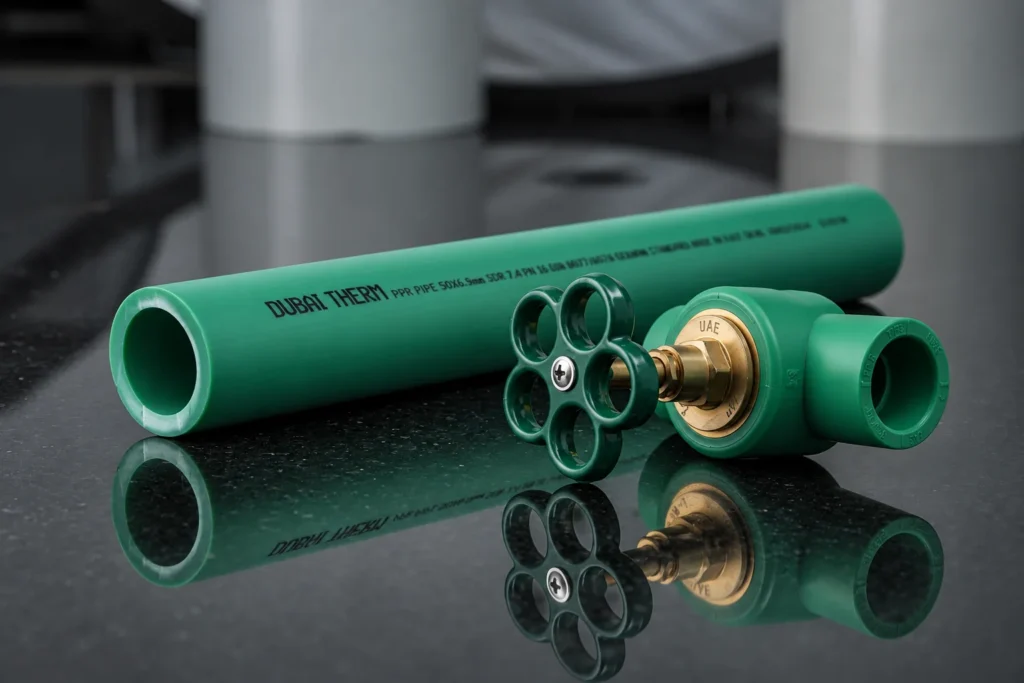
PPR pipes are joined using heat fusion, which bonds the pipe and fitting together. When the process is carried out correctly, the connection forms a permanent joint.
However, incorrect heating, poor alignment, contamination or movement during cooling can affect the joint and lead to leakage after PPR pipe installation.
Understanding these problems helps installers identify mistakes before the piping system is put into service.
1. Incorrect Heating Temperature or Time
Heating is one of the most important factors in PPR joint quality.
Underheating: If the pipe and fitting are not heated sufficiently, the surfaces may not fuse properly. This can leave a weak connection that may leak under pressure.
Overheating: Excessive heating can deform the material and cause molten plastic to build up inside the joint, restricting water flow.
How to prevent it:
- Use a temperature-controlled PPR fusion machine.
- Follow the manufacturer’s heating times for each pipe diameter.
- Check that the welding tool has reached the required temperature before use.
2. Dirt or Moisture on the Joining Surfaces
Dust, oil, moisture and other contaminants can interfere with proper fusion.
Even when the heating temperature is correct, contaminated surfaces may prevent a consistent bond between the pipe and fitting.
How to prevent it:
- Keep pipe ends and fitting sockets clean and dry.
- Inspect the joining surfaces before heating.
- Clean welding tools and heating sockets as recommended by the equipment manufacturer.
3. Incorrect Pipe Insertion Depth
The pipe must enter the fitting to the specified depth.
Insufficient insertion reduces the contact area between the pipe and fitting, potentially weakening the joint.
Excessive insertion can push softened material inward and restrict the internal opening.
How to prevent it:
- Mark the required insertion depth before heating.
- Use the manufacturer’s depth specifications.
- Insert the pipe straight without forcing it beyond the marked position.
4. Twisting or Misalignment During Joining
After heating, the pipe and fitting should be joined in the correct alignment.
Twisting or changing the position during fusion can disturb the softened material and affect joint formation.
How to prevent it:
- Align the pipe and fitting before heating.
- Join them straight without twisting.
- Keep the connection in position during the specified joining and cooling periods.
5. Moving the Joint Before It Cools
A newly fused PPR joint needs sufficient time to cool.
Moving, bending or placing pressure on the joint too early may disturb the connection before it has developed the required strength.
How to prevent it:
- Follow the recommended cooling time.
- Keep the joint undisturbed during cooling.
- Avoid applying mechanical loads or testing pressure before the permitted time.
Cooling requirements vary according to pipe diameter and the manufacturer’s instructions.
6. Using Incompatible Pipes or Fittings
Not every pipe and fitting should be assumed compatible simply because both are labelled PPR.
Differences in dimensions, material specifications or joining requirements can affect the quality of the connection.
How to prevent it:
- Use compatible pipes and fittings.
- Verify dimensions and system specifications.
- Follow the joining instructions approved for the selected products.
7. Excessive Stress on Pipe Connections
Even a properly fused connection can experience problems if the installation places excessive stress on the piping system.
Poor support, restricted thermal movement, misalignment or unexpected mechanical loads may contribute to joint damage.
How to prevent it:
- Provide appropriate pipe supports.
- Allow for thermal expansion where required.
- Avoid forcing misaligned pipes into position.
- Follow the project specifications for operating pressure and temperature.
How to Identify a Problematic PPR Joint
Before concealing or commissioning the pipework, check for:
- Visible gaps between the pipe and fitting
- Incorrect joint alignment
- Excessive deformation around the connection
- Cracks or damage
- Signs of water leakage during testing
Important: A joint can appear normal externally and still contain an internal fusion defect. Visual inspection alone cannot confirm joint strength.
Can a Leaking PPR Joint Be Repaired?
A leaking heat-fused joint cannot normally be repaired by simply tightening the connection.
The affected section may need to be removed and replaced using compatible pipes and fittings.
Before carrying out repairs:
- Shut off the water supply
- Identify the exact source of leakage.
- Inspect the affected pipe and fitting.
- Have a qualified installer carry out the appropriate repair.
Do not conceal repaired pipework before the required testing is completed.
Quick Checklist: Preventing PPR Joint Leaks
|
Check |
What to Verify |
|
Heating |
Correct temperature and heating time |
|
Cleanliness |
Dry, uncontaminated joining surfaces |
|
Insertion |
Correct insertion depth |
|
Alignment |
Straight connection without twisting |
|
Cooling |
Joint remains undisturbed |
|
Compatibility |
Matching pipes and fittings |
|
Support |
No excessive stress on connections |
|
Testing |
Required pressure test completed |
Dubai Therm PPR Pipes & Fittings
Dubai Polymer manufactures Dubai Therm PPR pipes and fittings for hot and cold water plumbing applications.
Our PPR pipes and fittings are available in sizes from 16 mm to 110 mm for residential, commercial and industrial requirements.
Contact Dubai Polymer for product specifications, fitting availability and project enquiries.
Frequently Asked Questions
Why does a PPR pipe joint leak after installation?
Possible causes include insufficient heating, contaminated surfaces, incorrect insertion depth, misalignment or movement during cooling.
Can overheating cause a PPR joint to leak?
Yes. Excessive heating can deform the material and affect joint quality. It may also restrict the internal pipe opening.
What temperature is used for PPR pipe fusion?
Many PPR socket-fusion systems use approximately 260°C. Follow the manufacturer’s specified temperature and heating time.
Can a leaking PPR joint be heated again?
Reheating an installed, leaking joint is not a reliable standard repair. The affected connection may need to be cut out and replaced.
How can I check whether a PPR joint is leaking?
Inspect the connection and carry out the pressure test required by the piping-system manufacturer and project specifications.