
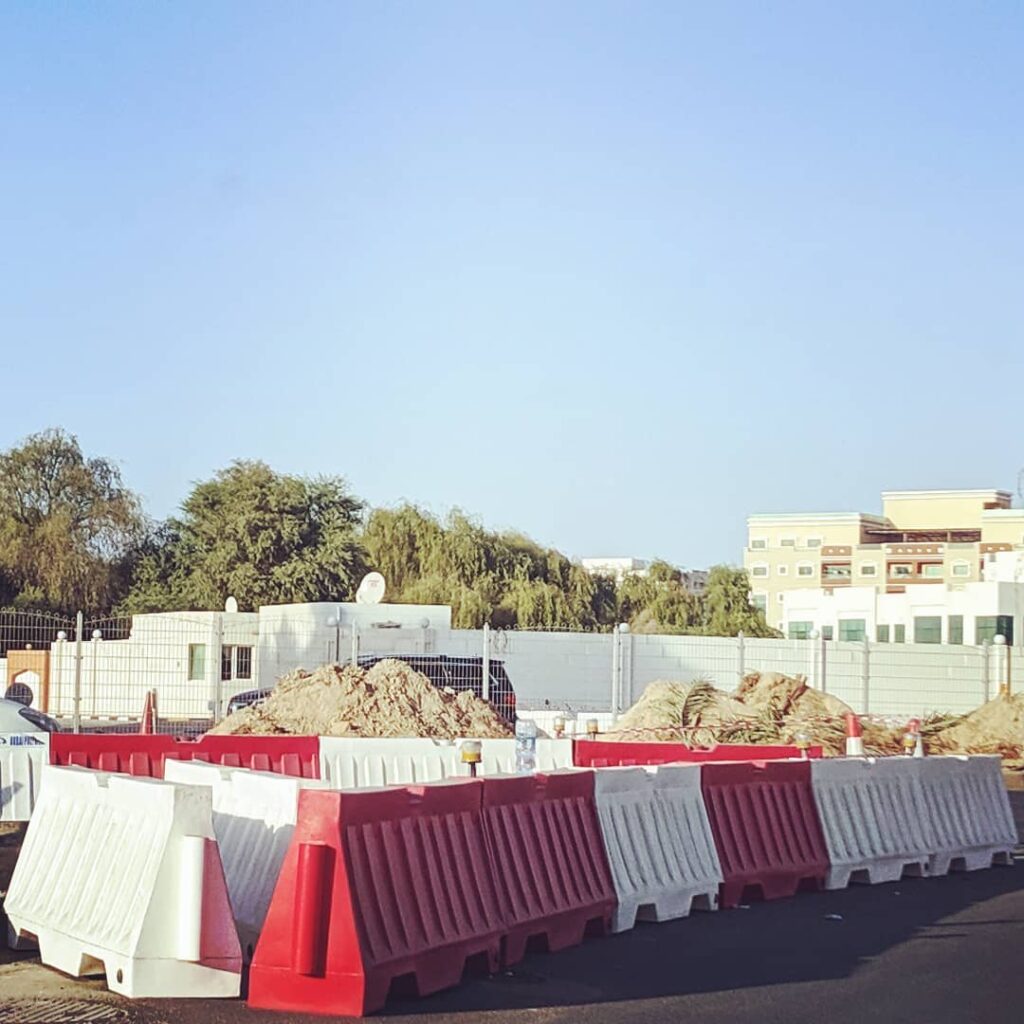
Road barriers are not all made for the same job. Some projects need a barrier that can be moved every few days. Others need a heavy barrier that stays in place for months or years.
That is where the choice between plastic road barriers and concrete barriers becomes important.
Plastic road barriers are better for temporary works, construction sites, event routes and areas where barriers need to be moved or reused. Concrete barriers are better for long-term road separation, highway works and high-impact protection.
Quick Comparison
|
Factor |
Plastic Road Barriers |
Concrete Barriers |
|
Weight |
Lightweight when empty |
Very heavy |
|
Installation |
Easier to transport and position |
Requires lifting equipment |
|
Best use |
Temporary traffic control and site safety |
Long-term or high-impact separation |
|
Relocation |
Easy to move and reposition |
Difficult to relocate |
|
Site flexibility |
High |
Low |
|
Storage |
Easier to stack and handle |
Requires more space and machinery |
|
Visibility |
Available in bright colours |
Usually plain concrete |
|
Cost handling |
Lower handling cost |
Higher transport and lifting cost |
|
Damage risk |
Less likely to damage surfaces during handling |
Can damage roads or paved areas if mishandled |
|
Strength |
Depends on design, filling and application |
High mass and strong physical separation |
What Are Plastic Road Barriers?
Plastic road barriers are lightweight barriers commonly used for temporary traffic management and construction-site safety.
They are usually made from durable plastic materials and are designed for easier handling, transport and site placement. Some plastic barriers are designed to be filled with water or sand to improve stability, depending on the model and site requirement.
Plastic barriers are commonly used for:
- Roadworks
- Construction sites
- Temporary diversions
- Parking areas
- Event routes
- Pedestrian separation
- Work-zone boundaries
- Utility maintenance areas
- School and facility traffic control
- Industrial site access control
Their main advantage is flexibility. Contractors can install them, move them, extend the barrier line and reuse them on different sites.
What Are Concrete Road Barriers?
Concrete barriers are heavy barriers used where stronger physical separation is required.
They are commonly used for:
- High-speed roads
- Permanent traffic separation
- Long-term road projects
- Bridge works
- Highway dividers
- Heavy vehicle areas
- Fixed protection zones
- Critical infrastructure protection
Concrete barriers are strong and stable because of their weight. However, that same weight makes them harder to transport, install, remove and relocate.
They normally require cranes, forklifts or specialised lifting equipment. This increases handling time and project planning requirements.
Which Barrier Is Better for Temporary Projects?
For temporary projects, plastic road barriers are usually the more practical choice.
Temporary sites often change. Access points move. Work zones shift. Traffic diversions are adjusted. Contractors may need to reposition barriers several times during a project.
Plastic barriers are easier to manage in these situations because they are:
- Easier to transport
- Faster to install
- Easier to reposition
- Better suited for short-term use
- Reusable across multiple sites
- More visible in work zones
- Easier to store after use
For construction companies, this can reduce labour time and make site changes easier.
Concrete barriers may still be required where the approved traffic-management plan demands stronger physical protection. The final decision should always follow the project safety requirement and authority-approved plan.
Which Barrier Is Better for Long-Term Road Protection?
For long-term road separation or high-impact protection, concrete barriers may be more suitable.
Concrete barriers provide stronger mass and physical resistance. They are often selected for fixed road layouts, highways and areas where barriers will remain in place for a long period.
However, concrete barriers are not always practical for short-term site control. Moving them repeatedly can slow down work and increase equipment requirements.
For long-term or high-risk traffic conditions, the project consultant or road authority should decide the required barrier type.
Plastic Barriers for Construction Sites
Construction sites often need temporary separation between vehicles, workers, equipment and public areas.
Plastic road barriers are useful for:
- Marking site boundaries
- Separating vehicle movement areas
- Closing unsafe zones
- Guiding delivery vehicles
- Managing temporary access roads
- Protecting pedestrian walkways
- Separating roadwork areas from active traffic
- Controlling parking and loading zones
They are especially useful when the site layout changes during different project stages.
Before ordering, contractors should check:
- Required barrier length
- Site access
- Ground condition
- Wind exposure
- Vehicle movement
- Pedestrian movement
- Filling requirement, if applicable
- Interlocking requirement
- Visibility requirement
- Project safety plan
Plastic Barriers for Roadworks
Roadworks often require quick installation and clear visibility.
Plastic barriers can help guide drivers and separate active work areas from traffic lanes. Their bright colour and continuous barrier line make them more noticeable than loose cones in many temporary layouts.
They may be used for:
- Lane diversions
- Temporary road closures
- Utility repair zones
- Maintenance work
- Excavation boundaries
- Pavement works
- Entry and exit control
For road-facing applications, the barrier system should always match the approved traffic-management plan.
When Should You Choose Plastic Road Barriers?
Plastic barriers are a good choice when the project requires:
- Temporary traffic control
- Easy installation
- Frequent relocation
- Clear visual guidance
- Reusable barriers
- Lightweight handling
- Short-term construction safety
- Event or crowd route control
- Site boundary marking
They are also useful when barriers need to be delivered, installed, and removed without heavy lifting equipment.
Plastic barriers are not a replacement for every concrete barrier. They should be selected based on site risk, speed conditions, vehicle exposure and project approval. Also, plastic barriers are cheaper than concrete barriers.
When Should You Choose Concrete Barriers?
Concrete barriers may be the better choice when the project requires:
- Permanent or long-term separation
- High-mass protection
- Highway or high-speed road use
- Heavy vehicle containment
- Fixed lane separation
- Stronger impact resistance
- Long-term infrastructure protection
Concrete barriers are not as flexible, but they are suitable where strong physical separation is the priority.
Important Safety Considerations
The barrier material is only one part of the decision.
Before choosing any road barrier, check:
- Traffic speed near the work zone
- Distance between traffic and workers
- Duration of the work
- Vehicle type using the road
- Road authority requirements
- Visibility during day and night
- Wind exposure
- Ground condition
- Barrier connection method
- Filling or anchoring requirement
- Site access for delivery and removal
For public roads, contractors should follow the approved traffic-management plan and relevant authority requirements.
Dubai Polymer Road Barriers
Dubai Polymer offers plastic road barriers for project and site-safety requirements in the UAE.
The current road-barrier range includes:
|
Model |
Size |
|
RB01 |
33 cm width x 77 cm height x 198 cm length |
|
RB02 |
45 cm width x 80 cm height x 2 m length |
These barriers can be considered for construction sites, roadworks, temporary traffic guidance, parking areas and work-zone separation.
Before ordering, customers should confirm the required model, quantity, project location, delivery date and site application with Dubai Polymer.
For project enquiries, share the required barrier size, total quantity and delivery location so the team can provide the right product information and quotation.
How to Choose the Right Road Barrier
Use this simple checklist before ordering:
- What is the purpose of the barrier?
- Is the project temporary or long-term?
- Will the barrier need to be moved?
- Is the barrier for road traffic, site control or pedestrian separation?
- What is the required barrier length?
- Is filling required?
- Is interlocking required?
- What colour or visibility requirement is needed?
- Is delivery access available?
- Is authority approval required?
- What is the project location?
- How soon is delivery required?
This helps the supplier recommend the right model and quantity.
Plastic vs Concrete Road Barriers
Plastic road barriers are usually better for temporary works, construction sites, event routes, parking control and flexible traffic-management needs.
Concrete barriers are usually better for long-term, fixed and high-impact separation where heavy physical protection is required.
So the answer depends on the project.
For most temporary construction and traffic-control applications in the UAE, plastic road barriers are often the more practical option because they are easier to move, install, store and reuse.
For permanent highway protection or high-risk vehicle containment, concrete barriers may be required.
Request Plastic Road Barriers in UAE
Dubai Polymer supplies plastic road barriers for construction, roadwork, site safety and temporary traffic-management applications.
To request a quotation, share:
- Required barrier model
- Quantity
- Project location
- Delivery date
- Site application
- Any specific colour or filling requirement
CTA: Request a Road Barrier Quote
Frequently Asked Questions
Are plastic road barriers better than concrete barriers?
Plastic barriers are better for temporary and flexible applications. Concrete barriers are better for fixed, long-term or high-impact separation.
Where are plastic road barriers used?
Plastic road barriers are used on construction sites, roadworks, parking areas, event routes, temporary diversions and work-zone boundaries.
Are concrete barriers stronger than plastic barriers?
Yes. Concrete barriers are heavier and provide stronger physical separation. Plastic barriers are easier to move, install and reuse.
Which barrier is better for construction sites?
Plastic road barriers are usually more practical for construction sites because they can be moved as the site layout changes.
Can plastic road barriers be reused?
Yes. Plastic road barriers can be reused on different projects when they are handled and stored properly.
What should I check before ordering road barriers?
Check the project use, required quantity, barrier size, site location, delivery access and traffic-management requirements.
Does Dubai Polymer supply plastic road barriers in the UAE?
Yes. Dubai Polymer supplies plastic road barriers for construction, road safety and temporary traffic-control applications in the UAE.